

The Sociology Reporter | Spring 2026
The Sociology Reporter | Spring 2026
Message from the Chair
Happy Spring semester! We had a very busy
and exciting Fall, packed with amazing events
and incredible classes. Thank you to our
faculty, students, and staff for all your hard
work. Best of luck for the rest of the semester!
– Dr. Eve Veliz-Moran, Department Chair
Fall 2025 Lecture Series
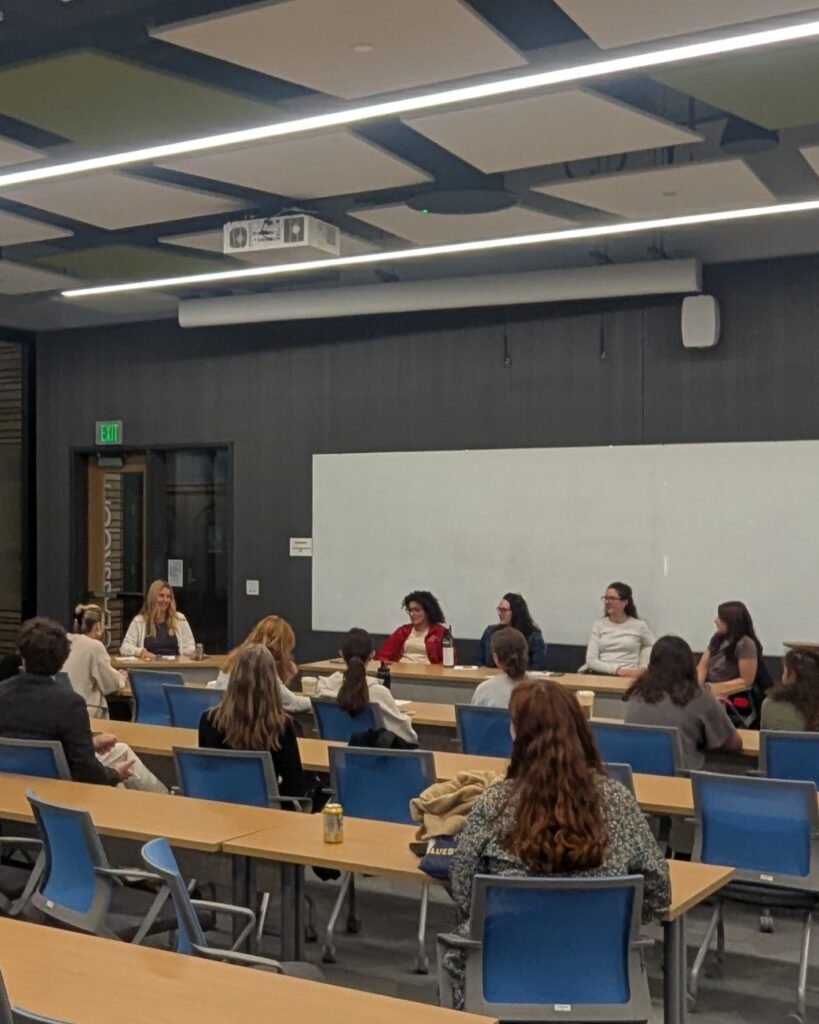
Advocating for Our Neighbors: A Conversation with PC Alumni
October 2025
This October, the department hosted the Fall ’25 alumni panel for our, “Sociology in the Real World: Alumni Lecture Series”. The topic for this panel was “Advocating for Our Neighbors”, and we welcomed four alumni who work in Social Work; Meghan O’Connor, Cristy Romero, Molly Helms, and Kristen Rezuke. The alumni shared their experiences, career trajectories, and how sociology intersects with their work every day.
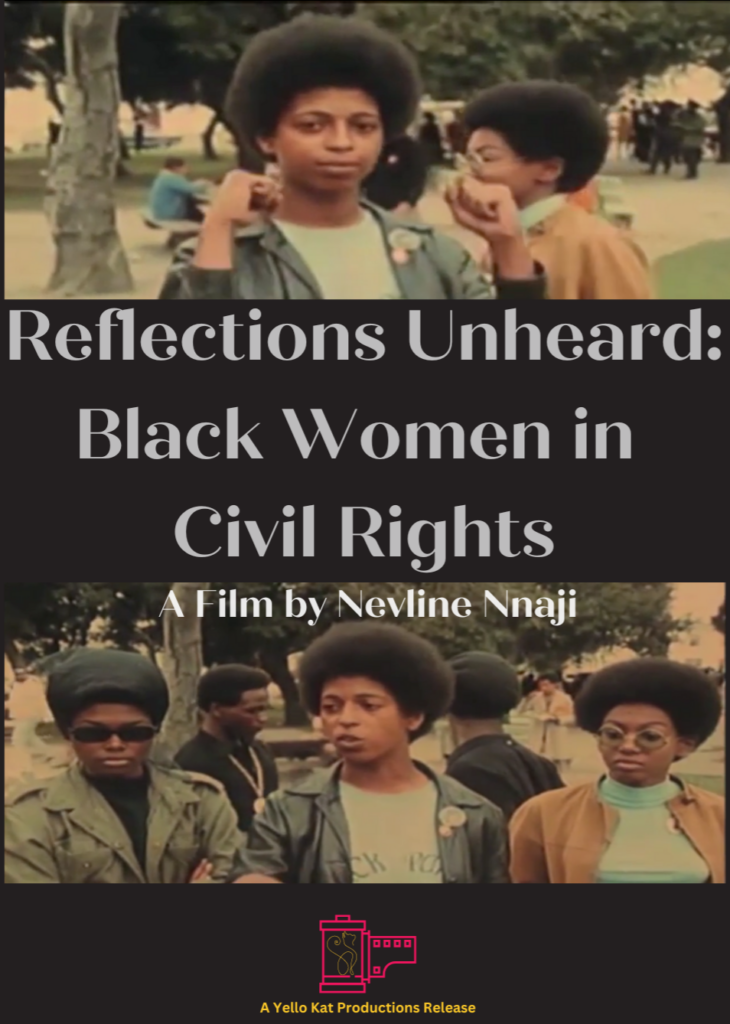
“Reflections Unheard” Documentary Screening
October 2025
Also in October, the department co-sponsored the screening of Reflections Unheard: Black Women in Civil Rights with the Departments of Black Studies and Women’s and Gender Studies. Directed by Nevline Nnaji, the film, “through the personal stories of several former black female Civil Rights activists, unearths the lesser-known story of black women’s political marginalization between the male-dominated Black Power movement, and the predominantly white and middle class Feminist movement during the 1960s and 70s.”
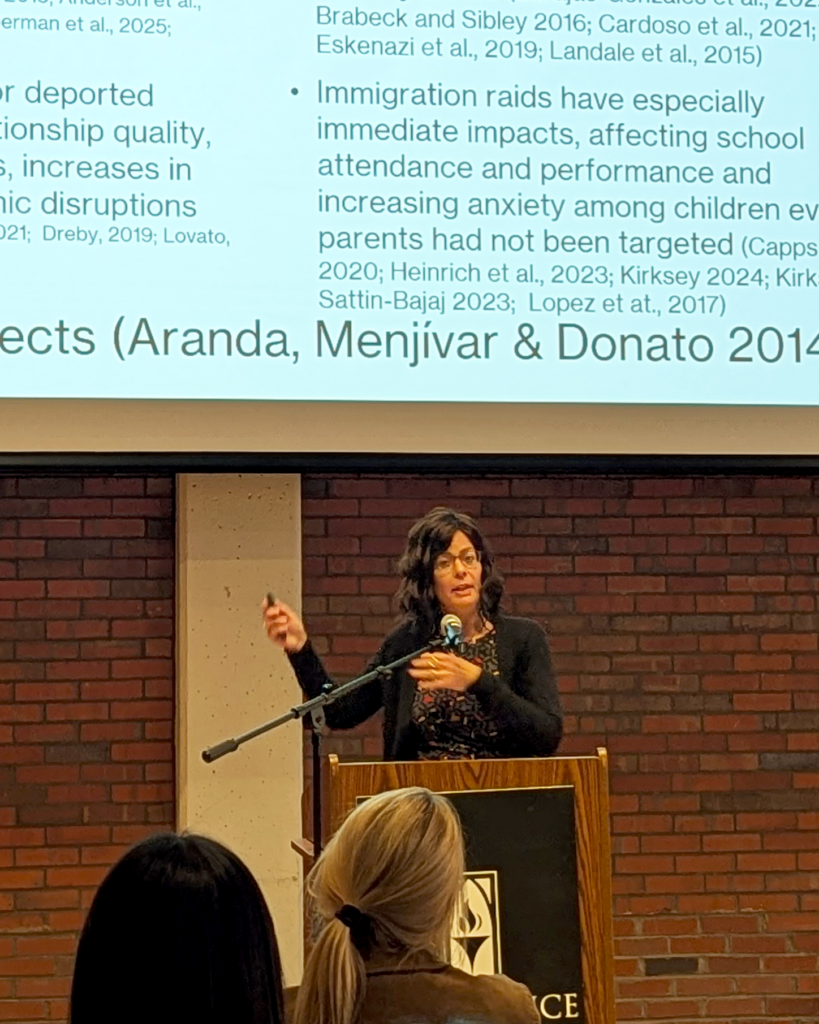
Dr. Joanna Dreby, “How Communities Matter for Surviving the I.C.E. Age”
November 2025
In November, the department welcomed Dr. Joanna Dreby, Professor of Sociology at the University at Albany, SUNY, to give a talk on her newly-published book, Surviving the I.C.E. Age: Children of Immigrants in New York. Dr. Dreby’s research explores family dynamics under conditions of increased globalization, with specific expertise on international migration, gender, and children. In the book, Dr. Dreby draws on interviews with young adults with foreign born parents to better understand what it was like to grow up during a time of heightened U.S. migratory control.
Faculty News
Dr. Martinez Grant Recipient
Congratulations to Dr. Martinez, who was awarded a 2025 Grant for Researchers from The Louisville Institute!
The Grant for Researchers is a new grant program established by The Institute to support scholarly research in Christian faith and life, the practice of ministry, religious trends and movements, Christian and other faith-based institutions, and religion and social issues. Dr. Martinez’s project, Religious Social Capital and the Browning of the American Church: The Case for Latine Congregations, investigates implications of the “browning” of the American church by comparing how Latine and White congregations address their constituents, neighborhood, and nation. Martinez will field a sample of 50 predominantly Latine and 50 predominantly White churches to consider the religious tradition of each congregation, its surrounding community, and the dynamics of each church. The research will have wide-reaching implications on how religious leaders discern studying and ministering to the Latine community post pandemic.
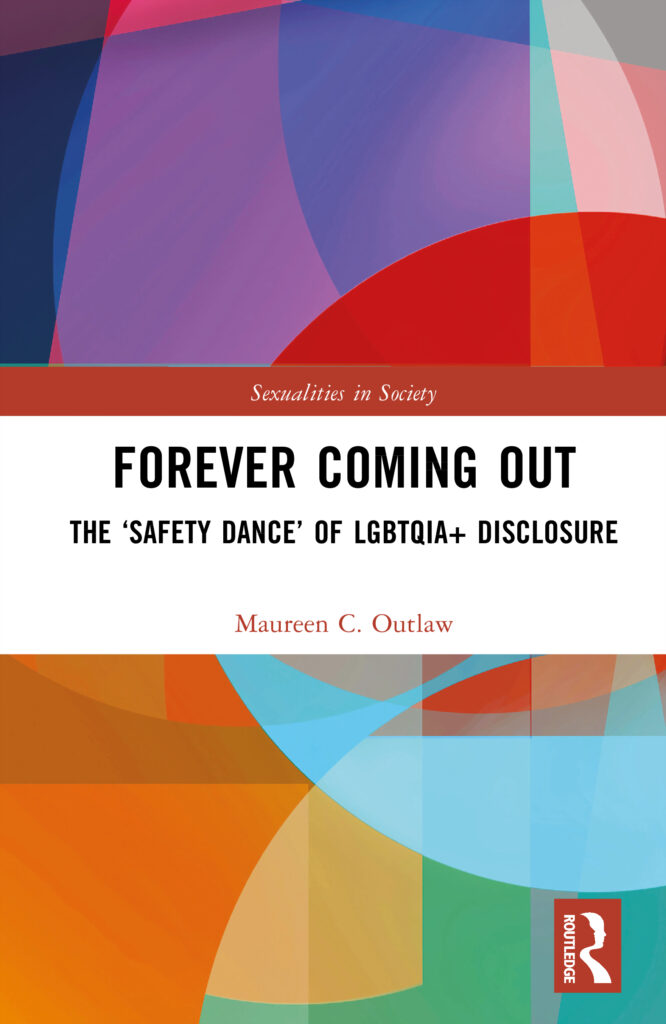
“Forever Coming Out”
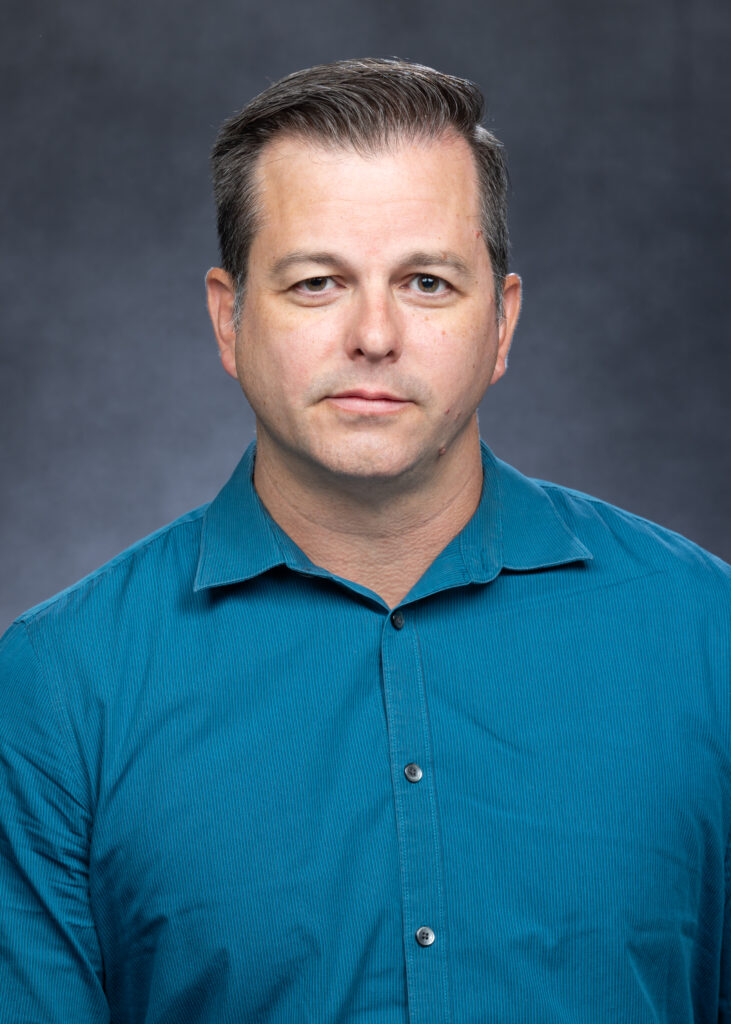
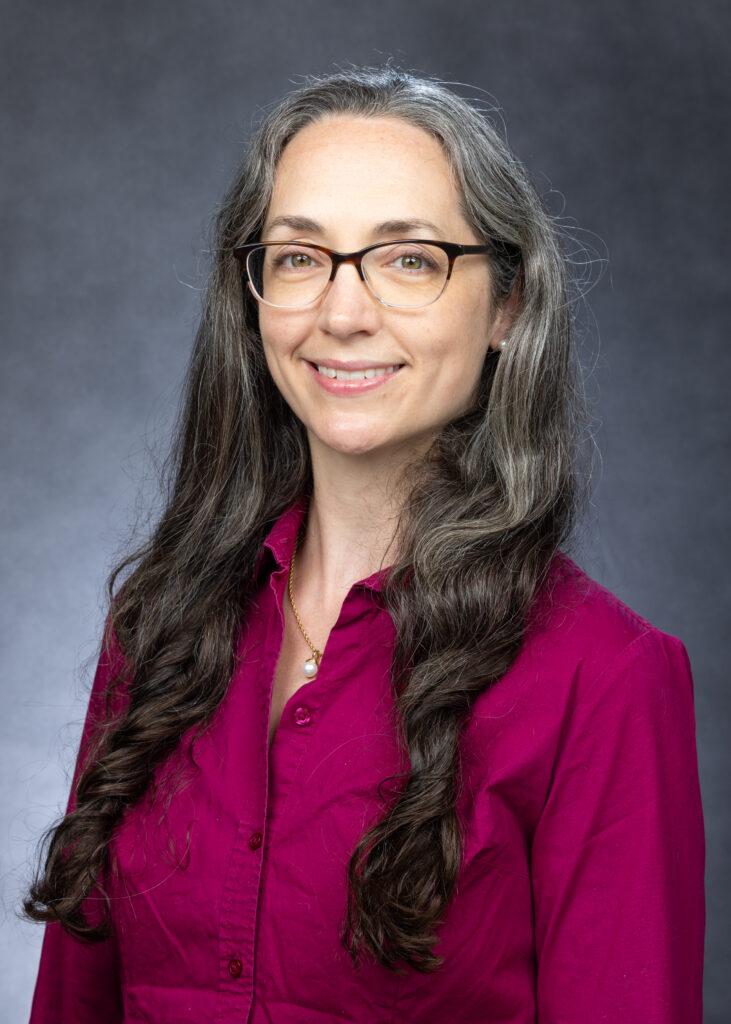
Congratulations to Dr. Outlaw, who had a new book come to print on February 19th!
Three of her Sociology alumni students of helped contribute to the coding of the data. “Forever Coming Out” is a book that challenges the persistent myth of a singular coming-out experience and introduces the concept of the “safety dance,” a recurring and complex set of assessments and adjustments LGBTQIA+ individuals engage in when determining whether, and when, to disclose their identity. The notion of the safety dance is based on data and insights from interviews with 69 LGBTQ+ adults’ lived experience of identity disclosure and exposure (“coming out”) in various regions throughout the United States. The book highlights the interaction of social forces and social institutions as critical variables impacting decisions. Ultimately, it provides a way of understanding this ever-present feature in the lives of LGBTQIA+ people through examining their approaches, awareness, assessments, and adjustments to the social scenarios they encounter.
Dr. Roberts on Climate Change
Congratulations to Dr. Roberts, who published an article on January 5th, titled “Local government capacity as climate remedy: public trust, public policy, and structural solutions.”
The article, co-written by Craig Segall and Dr. Roberts, makes a case for directing resources to local governments as a means to fight climate change. Over the last 50 years, Americans have become less trusting of other people and of major institutions, including government at all levels, which poses a significant challenge for passing and implementing a strong federal climate policy. Nevertheless, social research on trust gives some reason for optimism, because positive interactions with local government have been found to improve both social and institutional trust. We discuss reasons that local government capacity has declined over several decades and suggest policy approaches that can reverse this trend, restoring trust and improving the environment at the same time.
Learn more about Dr. Roberts’ paper with the video abstract below:
Dr. Miller Article and Award
Congratulations to Dr. Miller, who has been named a 2026-2027 Early Career Fellow with the Work and Family Researchers Network. She also recently published an article entitled “Police Radio Communications as a Measure” with her co-author Stephen L. Morgan.
The article is about how criminal justice research on policing effectiveness is limited by available measures of police activity. This article proposes a new measure – the summed duration of all police radio transmissions per hour, distributed across channels used by an agency to coordinate patrol-related police activity. Based on an analysis of policing in Baltimore, over an interval of 40 months from 2019 through 2022, this new measure has a clear and separable relationship with calls for service, recorded crime incidents, and arrests, as well as sixteen specific policy shocks in response to the COVID pandemic. The measure’s residual error variance across police districts also has an interpretable pattern, lending further support to a claim of construct validity. In conclusion, additional uses of police radio communications to construct measures are discussed, including those that code the spoken content of transmissions. The viability of these more detailed measures will depend on the success of future work to machine-transcribe recorded transmissions in order to generate text corpora.
Fall 2026 Course Offerings
SOC 101: Introduction to Sociology*
*Visit Cyberfriar for individual instructors
SOC 301: Sociology of the Family | Dr. Veliz-Moran
SOC 314: Black Feminisms | Dr. Cato
SOC 337_001/002: Criminology | Dr. Greenleaf
SOC 365: Social Inequality in India | Dr. Vithayathil
SOC 370_001: ST: Immigrant Young Adults | Dr. Cebulko
SOC 370_002: ST: Race, Indigeneity, and Punishment | Dr. Henderson
SOC 370_003: ST: Medical Sociology | Dr. Gebremariam
SOC 380: Contemporary Social Theory | Dr. Jeong
SOC 381: Social Research Methods | Dr. Miller
SOC 446: Gender, Health, and Technology | Dr. Brooks
SOC 447: Women and Crime | Dr. Outlaw
SOC 450: Sociology Internship | Dr. Veliz-Moran
SOC 451: Women and Family Issues
Internship | Dr. Veliz-Moran
SOC 470_001: ST: Globalization and Tourism | Dr. Cebulko
SOC 470_003: ST: Punishment and Society | Dr. Greenleaf
Interested in Declaring a Sociology Major or Minor?
Email Dr. Veliz-Moran (evm@providence.edu) or Katherine Lynch (klynch25@providence.edu) to schedule an appointment!
Sociology Major Requirements:
SOC 101 – Introductory Sociology
SOC 380 – Contemporary Social Theory
SOC 381 – Social Research Methods
SOC 480 – Sociology Senior Capstone
Six (6) Sociology elective courses
Sociology Minor Requirements:
SOC 101 – Introductory Sociology
SOC 381 – Social Research Methods
Four (4) Sociology elective courses
Department of Sociology & Anthropology
Office Hours: Monday-Friday, 8:30am-4:30pm
Howley Hall 119
401.865.2125
sociology.anthropology@providence.edu